

If you follow organizing advice, you’ve likely heard the “one in-one out” rule. When you bring in a non-consumable item — a blouse, gadget, book, etc. — remove one item from your home, office, car in exchange. The swap can be from the same genre (one skirt for one skirt) or something completely different (a kitchen gadget for a collectible). There are no strict rules—use whatever method works for you.
If your space is already working for you, the one-in, one-out rule is effective. It helps keep things stable when you have enough storage and like how your place looks and feels.
Here’s where it falls apart. I’ve seen current and prospective clients feel like failures when their organizing or downsizing projects stall. These projects usually start with a lot of clutter or meet the definition of hoarding situations. The rubber finally met the road when there is nowhere to sit, limited space inhibits everyday tasks, increased safety and health risks, and relationship strain ran amok. Ongoing acquisition tendencies or keeping things that no longer serve any purpose make the situation even worse.

Before purchasing another top, take a beat. Will you need to swap out one or more items to meet your downsizing objectives? Is that likely?
Image by boutiquegirlish21 at Pixabay
Enter the “one-in-one-out” rule. For each item that comes in, something else is let go. This works really well to keep the status quo, if that’s your intention. Suppose you’re looking to push the dial? Before adding a dish set, a new countertop appliance, or a load of bargain books and promising to remove something later, ask: will this really help your downsizing? Swapping one item for one item barely moves the needle, if at all. The result: more discouragement, less motivation to keep going, and clutter stagnates or keeps growing.
What else can you do? A simple first step is to check out the Institute for Challenging Disorganization (ICD) Clutter–Hoarding Scale Quick Reference Guide. Don’t be put off by the word “hoarding” — the guide reflects a spectrum: Level 1 is normal clutter, Level 5 indicates conditions that threaten your own or your neighbors’ health, safety, relationships, and/or legal responsibilities. If you’re reading this, your home might already be above Level 1. Don’t be surprised that clutter levels vary from room to room — garages, attics, craft or play rooms often have more clutter than communal areas.
Once you identify the level that matches most of your home or problem areas, use that number to inform your “in–out” rule. The objective is to remove more than you bring in, so spaces clear faster. For example: if your home lands mostly at a Level 4, buying a new blouse means choosing four tops to donate, give away, sell, or textile recycle depending upon their usability condition. Try it and adjust as needed.
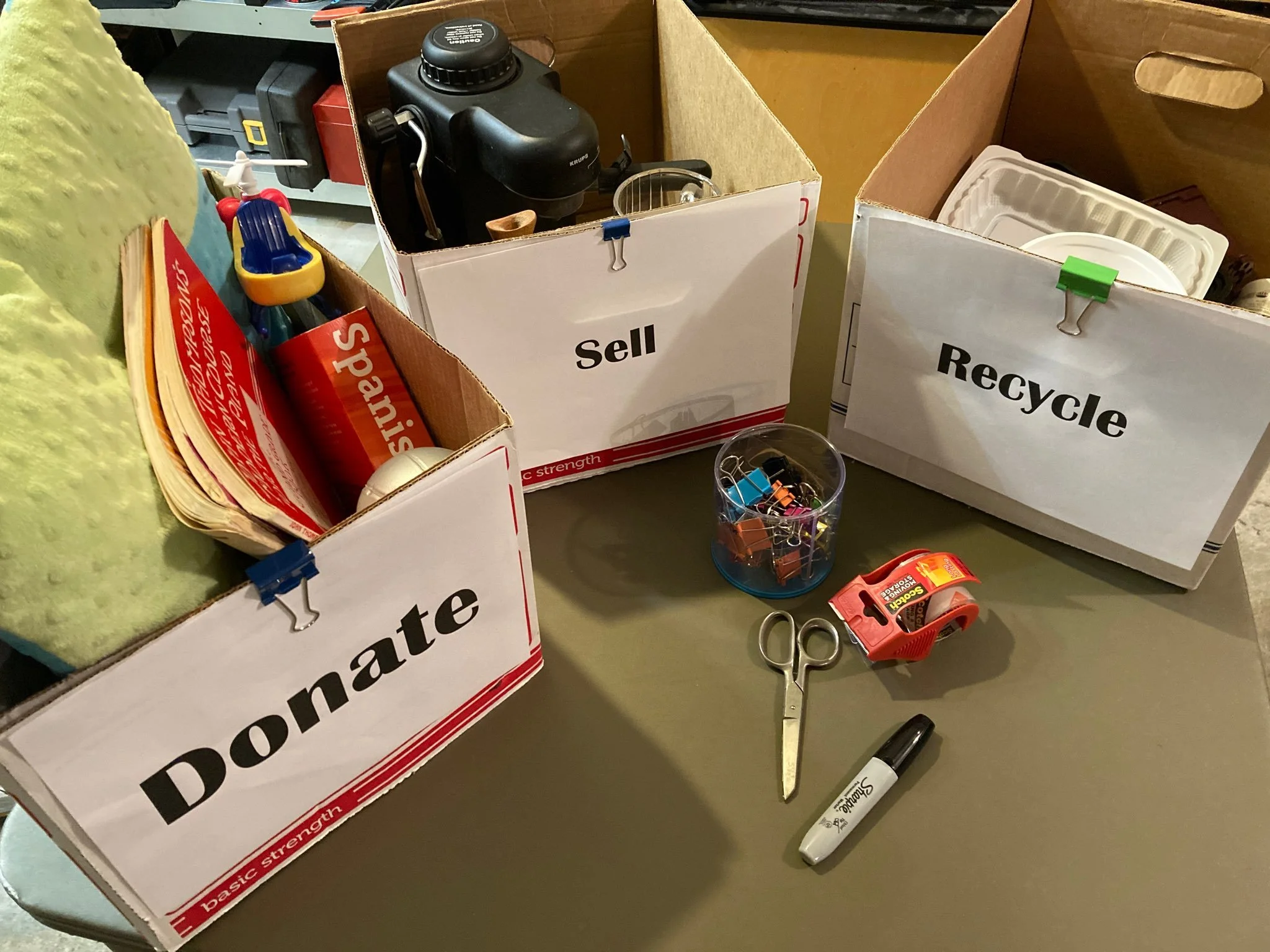
More things will need to go out to reach your downsizing goals.
If you’re moving to smaller quarters, even from a level 1 home, the one-in-one-out rule won’t be enough to make real progress. More things will need to go out so you and your belongings fit comfortably in your cozy next home. In the midst of a downsize, take a beat before buying any non-consumables.
This won’t be easy. You might need an accountability buddy to help you decide which clothes no longer flatter you, don’t fit, are out of style, or are beyond repair. Their emotional support will be an asset to step up motivation and help you plug away during tough moments and decision-fatigue. Choose your buddy wisely. Someone who won’t judge or distract you. Select a pal you enjoy partnering alongside. Then celebrate afterward.
If this rule won’t work for you, that’s fine. It’s just a guide and gives you options. If you can’t part with any items, you might decide you don’t have room for more blouse. Or try easing in to the process: if 4-for-1 feels too much, start with 2-for-1, then 3-for-1.
“Consumable” here means more than food or drink. It’s anything you use up and need again soon — toiletries, printer cartridges, cleaning supplies. Keep a small backup of items you use often to avoid last-minute runs. Stockpiling a year’s supply is usually unnecessary unless you live far away or an item is being discontinued.
Without adding extra emotions, try this process to see if it helps your project. If yes, keep going. If not, try making adjustments. Still no good? Try something else.
Schedule a free phone chat to see if Practical Sort can help with your downsizing, decluttering, or hoarding abatement project.

