

Quick catch up after a long hiatus. Feel free to skip ahead to the blog.
It feels really good to put words to the screen once again. My last blog published back in December 2025. Technically, it wasn't an actual blog, more like a redirection to Good Housekeeping’s “The Right Way to Organize Your Home Based on Your Personality, According to a Pro,” by Lifestyle Writer, Shelby Deering, featuring The Practical Sort. Previously, the last fully self-written blog was nearly a year ago, May 2025.
For a variety of reasons, I took a self-imposed writing pause. One justification admittedly relates to the theme of this month’s blog. Read on to sleuth my confession.
What got me back? Clients expressing the same refrain week in and month out. Their unknowing nudge prodded me back on track, at least for this month.
My sincere thanks to the treasured members of my Get it Done support & action group for selflessly sharing what not feeling like taking action is like for them. Let's take a look at this month's topic.
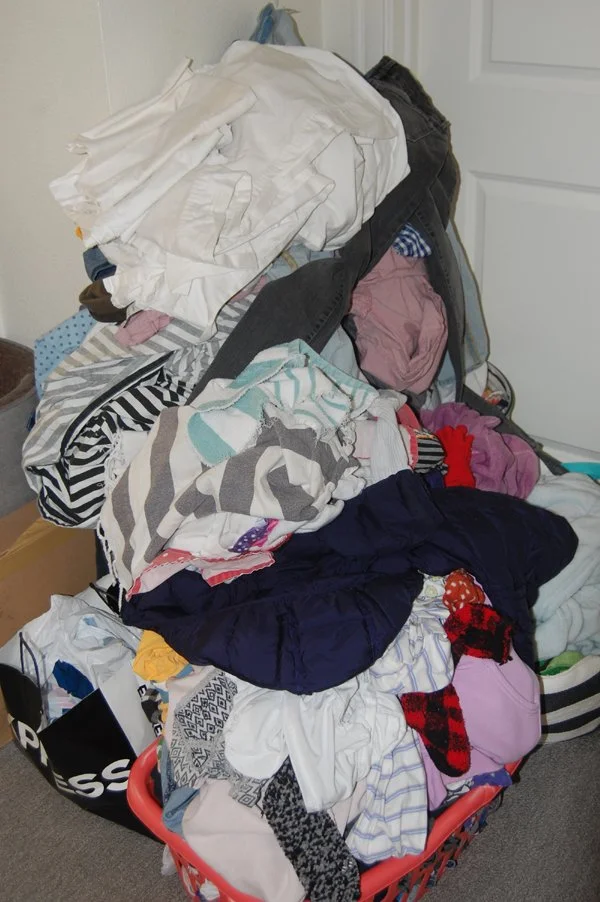
Dirty and clean laundry mountains topple all over the floor. Maybe next week.
Refrigerator and pantry are nearly empty. Time for a grocery run? Nah.
Dirty and clean laundry mountains topple out of the closet and onto the bedroom floor. Laundry day? Not feeling it. Maybe next week or when undies run out.
Bills and pending projects consume nearly every table, countertop and your desk. Get on it? Later. Definitely later.
Take-out wrappers, used tissues, and donation drop-offs fill your car like a dumpster. Uh, there’s plenty of room, it’s all good. Right?
No question, there’s lots to do. What are you going to do? Hmmm.
Frequently, insidiously, and confoundingly many of my clients bump up against “I don’t want to.” Pure lack of interest inertia. Oh boy. What do you do with that? Clients juggling moderate to severe ADHD traits continue to struggle to turn down the apathy switch despite all the acquired tools, skills, Tik Tok hacks, and following medication prescriptions.
Can’t get beyond “I don’t want to?” You’re not alone. Particularly now with so many of us feeling elements of gloomy societal despair.
Defiance vs Apathy
Vivid stubborn contrariness memories flash from my children’s toddler through teen years, and unquestionably my own insolent history. Defiant postures, hands inflexibly planted on hips, stomping feet, unyielding eyes, and pursed lips. In some ways, that level of audacity is easier for me to approach. It’s familiar. Deadened apathy stumps me. Apathy is not a trait I personally relate to. Nor deducing effective ways in and around this baffling symptom.
I can offer up countless productivity hacks; methods to judiciously economize on time, space, and money; approach tasks with higher efficiency; and even suggest basic motivation techniques to galvanize forward motion. When the sticky point is flat out no interest at all, we’re navigating rockier waters. Well more precisely, frozen waters. No ebb, no flow, not much of anything.
Deal Killing Inertia
Whether the looming task is quick and dirty such as sweeping up a dead bug, fetching postal mail, wiping up dropped crumbs, or much headier missions such as undertaking a difficult conversation, resolving (or attempting to resolve) billing errors, exercising, decluttering, yard work, laundry, cooking, you name it, there’s an odious impassiveness shutting down forward motion.
What’s typically driving inertia (is driving inertia an oxymoron)?
Low or no impetus to do the thing. In some cases, depressive moods or clinical depression leads to lack of desire to do anything at all, regardless of the context or prospective level of fulfillment. If you’re noticing a change in your energy, moods, physical wellness lingering beyond what is normal for you, consult with your medical practitioner for guidance. Medical intervention may not have worked in the past, keep trying as new research and options may be available. Ask friends and family members for referrals. Note: there is a shortage of mental health practitioners leading to limited availability and no openings for new clients. Don’t overlook alternative modalities as resources until you find a fit for your needs.
What is “Shiny Thing Syndrome”? Something else is far more appealing. Anything else quite often. Distractibility tendencies will ensure you see the thing over there, and there, and there rather than the one thing needing your attention. That tug most definitely includes doing absolutely nothing. Laying on a couch scrolling could be your brand of shiny thing.
Resistance to doing undesirable tasks is extremely common. Resistance can show up for many reasons. Unpleasant or unsuccessful past experiences is a sure-fire cause. Tried it, didn’t go well. Why do it again?
You may experience an inability to wrap your head around what to do first or how to do it at all? Confusion and decision fatigue are verifiable recipes for shutting down our brains and bodies. Why bother exerting the energy when you can opt to do nothing instead or put that thing off for another day or time?
Expectations can be based on actual information or perceived. You may sense that your ability to execute will not measure up to other’s standards or even your own. Better to stop before you start.
Your brain may miscalculate how long the action will take. If it senses the action will take far longer or require more effort than you wish to devote, overwhelm shutdown likely ensues.
Rabbit hole avalanches often cause cave-ins. How do I put this thing away if there’s no room? If I make room here, something will need to move elsewhere. But there’s no room there either. Now what? Leave everything where it is.
Experiences with hyper-focus tendencies point to previously missed appointments or other commitments. If you do nothing, none of this will matter.
Conscious or subconscious feelings that giving into something you don’t want to do is a form of ceding control. Loss of control can spawn opportunities for opposition. Growing up in a circumstance where submission was obligatory, no option for discussion, having your thoughts heard and considered, it makes sense that as an adult exercising control is your comeuppance. A chance to exert agency over decisions including making the decision not to decide. Granted as young children, most of us had no authority to make significant choices. But what if you didn’t have a say in what you wore? Who your friends were? What books to read? As an adult, this could play out in fiercely activating your freedom to pick and choose. It’s your turn to say “I don’t wanna”, and act accordingly.
What Can You Do?
What can you do when the problem is you don’t want to do anything? Suggesting that you do something might sound antithetical. However, choosing to do nothing can lead to troublesome consequences. You might just have to pull up your pants and get on with it.
Outsource
Find someone else to do it or at least help you get it done. Hire someone (if you have the means), barter, or ask a friend to assist. If you’re a social type person, working side-by-side often takes the bite out of dull or tough projects.
Find the Value
Find the value—how much is it worth to you to get something done? How good will it feel to have the weight off your back? To reward yourself for kicking it off your checklist? To feeling relief when the refrigerator and pantry offer options, the laundry piles are gone or at least contained, and you can give someone a lift in your car without embarrassment?
Inaction Price Tag
If you can’t find the worthiness, flip it. What’s the price tag if you don’t? How important is it to get done? If it ranks high such as taxes or pending bills sporting sizeable late fee penalties, ask yourself if it would be better to bite the short term bullet rather than resolving sanctions that await inaction?
If it’s not critical, but needs to get done, is the chore worth doing while it’s manageable(ish) before it gets harder? Takes more time? More energy? I didn’t want to do laundry a few days ago. The hampers were full. If I did laundry that day, I could avoid the tipping point where I’d have to run another load. Fewer loads meant less time spent transferring from washer to dryer, hanging and folding, ironing during a week when I already had little spare time. Waiting another day or two would have meant overflowing baskets, more time, more energy, and possibly running out of clean professional clothes.
Set the Stage for Action
What can you do to break the lackluster action down into the smallest, easiest, doable increments? Give yourself 3-7 minutes to lay the groundwork. Gather necessary papers, boot your computer, make a plan of action for a future set of 3 minutes including when next steps will be launched. Immediately set a reminder alert for that time/date so you don’t get off track or forget. Create an environment in which you typically thrive. Pay attention to climate control, lighting, sound (music, podcast, conversation), and whether you operate better solo or with a support companion. If you operate better with someone by your side, line someone up now with a quick text to see if and when they’re available. No one free? A stuffed animal or pet can serve an emotional support role. If you get into a sense of flow, keep going until available time, focus, and energy run out.
Feed the Dopamine
How do you get your dopamine hit? What’s dopamine? Dopamine, a neurotransmitter or brain messenger carrying signals between brain and body cells, is part of your brain’s reward or feel good system. Dopamine serves several roles including boosting motivation and regulating emotions. What fires you up? Gets you moving? Brings you good cheer? Rewards your efforts? Tap into those giblets to entice you to move forward or move at all.
Your brain’s reward system may be off-line due to physical or mental conditions. Again, consult with your physical or mental health practitioner, wellness instructor, life coach for guidance. ADHD traits, menopause, anxiety, depression, bi-polar symptoms and more can throw your neurobiology into a baffling quagmire.
Take a Pass
Go ahead, give yourself a pass. You’re the adult. That being said, expect that there will be consequences to any decision. Fall-out might come in the form of having to re-wear dirty underwear in exchange for a laundry pass. A late fee when your budget is already tight yet paying bills didn’t spark momentum. You could lose a friendship when you choose to blow off a date because you didn’t feel like going.
We all need a pass now and then. Some situations call for a pass such as battling an illness, processing a traumatic loss, (a person, a pet, a job, et. al.), physical injuries. In those cases, it’s less about having no interest. Instead, you’re serving your mind and body’s best interests.
Manage the Seldom Ebb and Constant Flow
The reality is there is always something to do. You got to be an adult. You get to make adult choices. You get to experience profoundly more expectations on your plate. Chances are your to-do list will never be blank or if you manage to finally get ahead, something comes down the pike, landing in your lap before you finish exhaling the sigh of relief. The busier the brain, the faster the to-do frenzy whips up. The trick is balance to ensure that you’re taking some time in between to-dos. Take time for self-care to refill your reservoir so you have energy, focus, and well-being. You’ll have a higher chance of desire to tackle one more thing. You don’t have to do it all. You don’t have to do it all at once. You don’t have to do the action all the way through its entirety, if it’s not urgent. Find a method to do it in a way that works for you.
Specific Ideas for Particular Traits and Preferences
If you’re prone to mind-boggling, time-consuming confusion or forgetfulness, keep your lists very short. Categorize tasks by urgency, priority, long-term, easy-knock-outs, etc. to tailor your focus more readily.
Create a step-by-step template for specific or general actions. Pre-made instructions help to avoid reinventing the wheel each time an action requires repeating such as annual tax filing. More specific directions, means less spinning next time.
Templates don’t need to be boring. Allow your creative juices to flow to suit your processing preferences and brain type traits. Rein the juices in if they become overly time-consuming or fall prey to perfectionist tendencies.
Beware of the Rabbit Hole
Before you step into a rabbit hole, watch for tendencies that lead to hours spent creating fun process instructions and action enticements, using up all your time and energy while never getting to anything on your list. As with everything in life, the secret is balance. How do you find balance?
Feel free to let me know if you find any of this helpful, or have discovered temporary or on-going methods to getting out of the apathy hole.

